Beautiful expo LA SOURCE DE LA LOIRE at the Palais Tokyo by Rose Lowder :
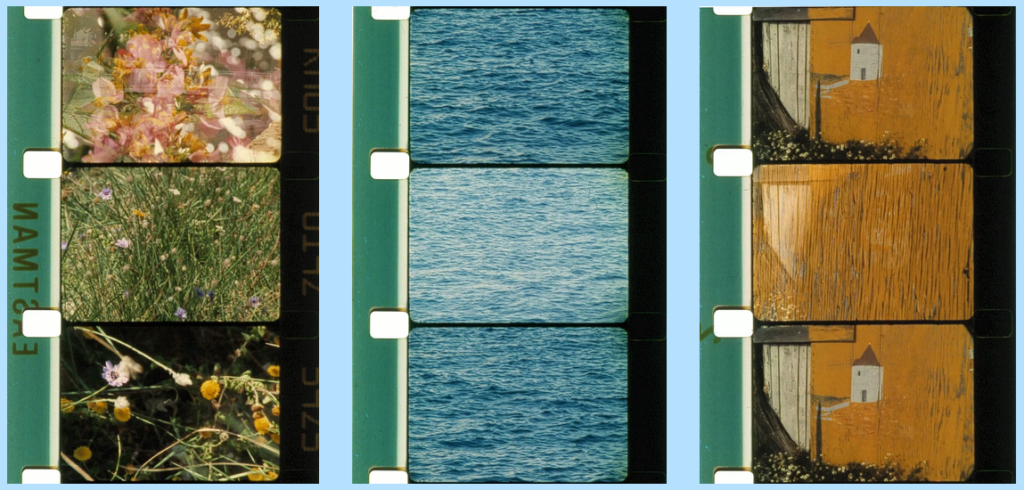
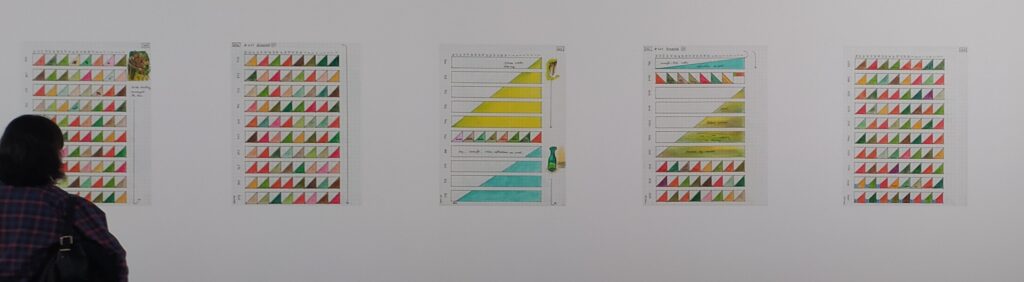
Especially beautiful the 16mm shots of streams and flowers and the flickering created by jumping ahead and back between different images. Great diagrams also showing the planning for the shots :
***
What shall I do with the HX8K extra LUTs and BRAM using the open source tool-chain ?
320×240, 1bpp = 76.8k bits = 19 BRAM
320×160, 2bpp (x2 wide, x3 tall) = 102.4k bits = 25 BRAM
I also have the external SRAM 32Kbit x 8bits = 256Kbit which I have a place for on the back of the board. It would allow me to do 320×240, 2bpp = 153.6k.
I also now have a zoom lens to test !
…and 3 bits for each color !
I would like prioritize to get the slit scanning working !!
***
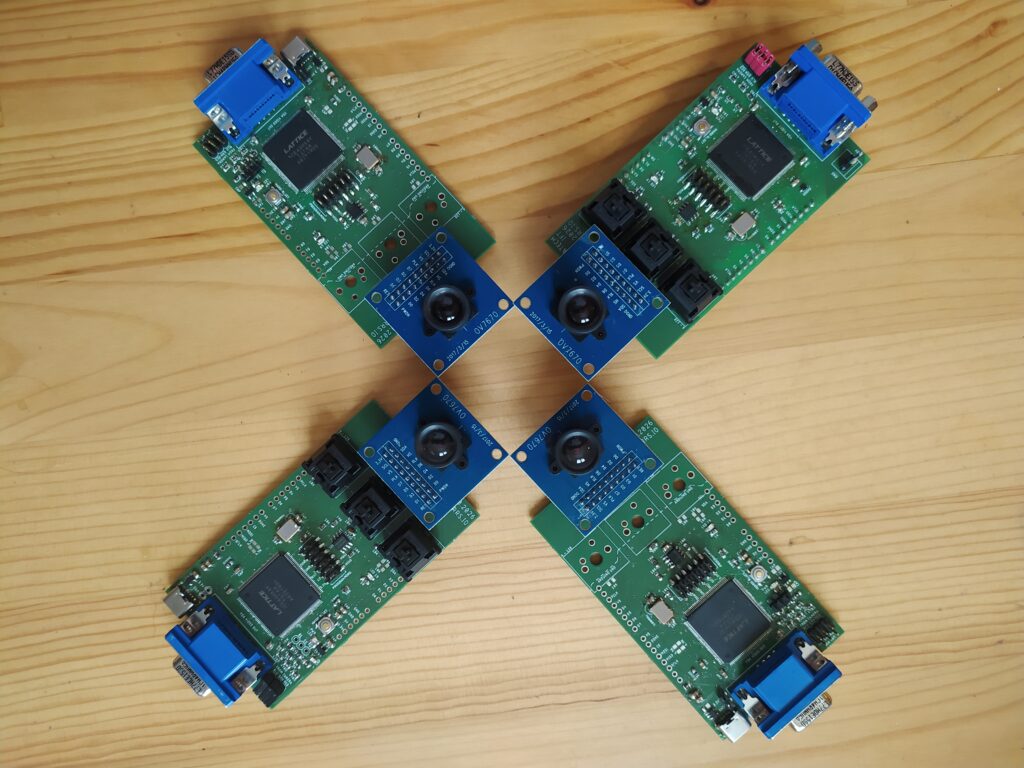
I should really have ordered a stencil to make these as it is hard especially to solder the FGPA, the USB C, and the oscillator. I hit many obstacles along the way from the power supply to shorted FPGA pins to oscillator and flash not working.
Talking with Nathalie around the Maison des Humanités Potentielles, we are now planning a combined workshop where we would bring together video and audio experimentation.
***
I have a screen buffer built from 16 bit-wide BRAM instead of 2-bit as I’ve been using previously. It has new artefacts which are the 20 vertical bands that are 16 bits wide :
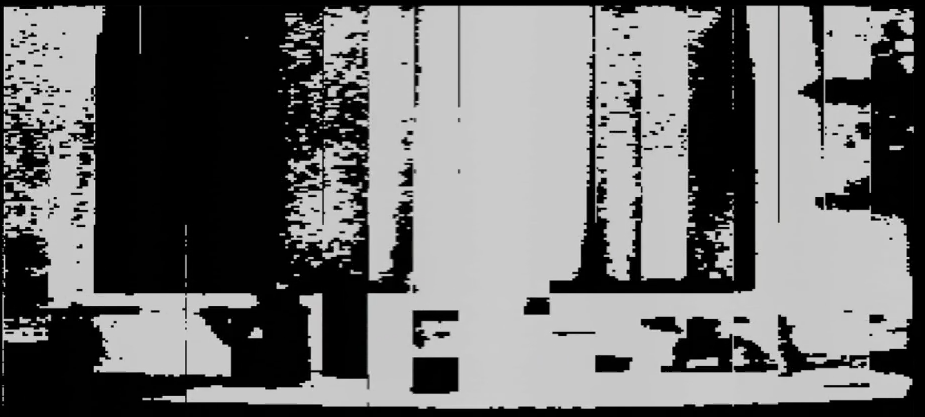
My main errors here could have been discovered by myself had I tested out my address formulas with the counter values to check the max values. I also seem to always get confused about the difference between bits used to store parallel data (memory) and bits used to store a binary count for a counter.
Here’s the address formula in the end :
read_address <= (h_counter>>5) + ((v_counter>>1)*20);h_counter has a max of 640. Divide that by 32 and you get 20. I’m addressing blocks of 16 bits now so the 20th block of 16 bits gets us to 320 which is the most we can fit horizontally in the memory. I was trying to use up all the 20 BRAMs in the HX4K but it seems verilog refuses to implicitly instantiate a BRAM that does not have a power of 2. So currently 16×4096 is as high as I am going, which uses only 16 of the BRAMs.
I could try to explicitly make 20 16×256 BRAMs and hand off between each row.
***
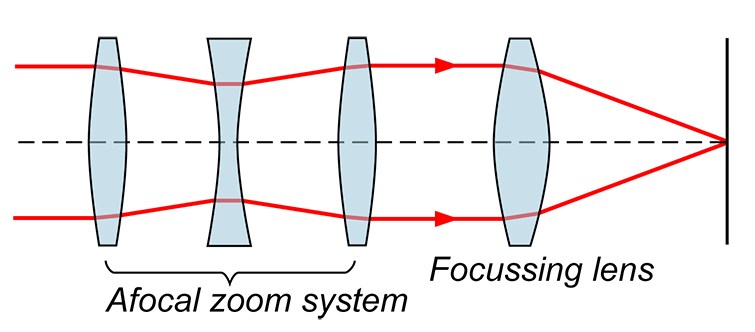
I tried the zoom lens.
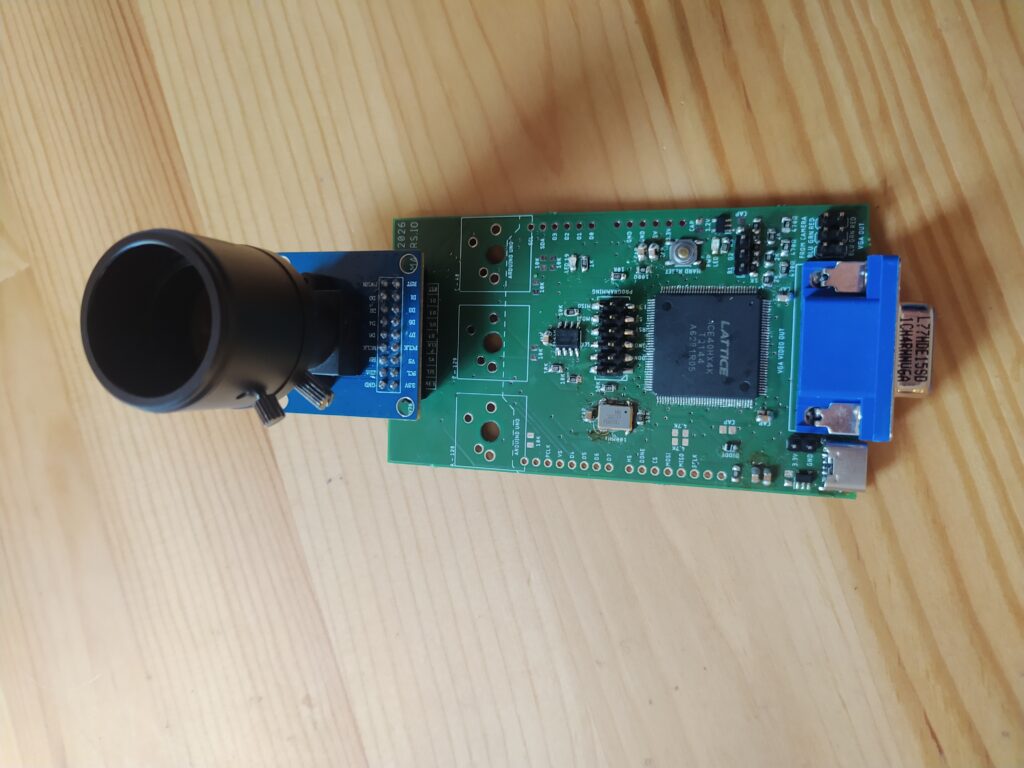
It has two parts, a zoom and a focus :